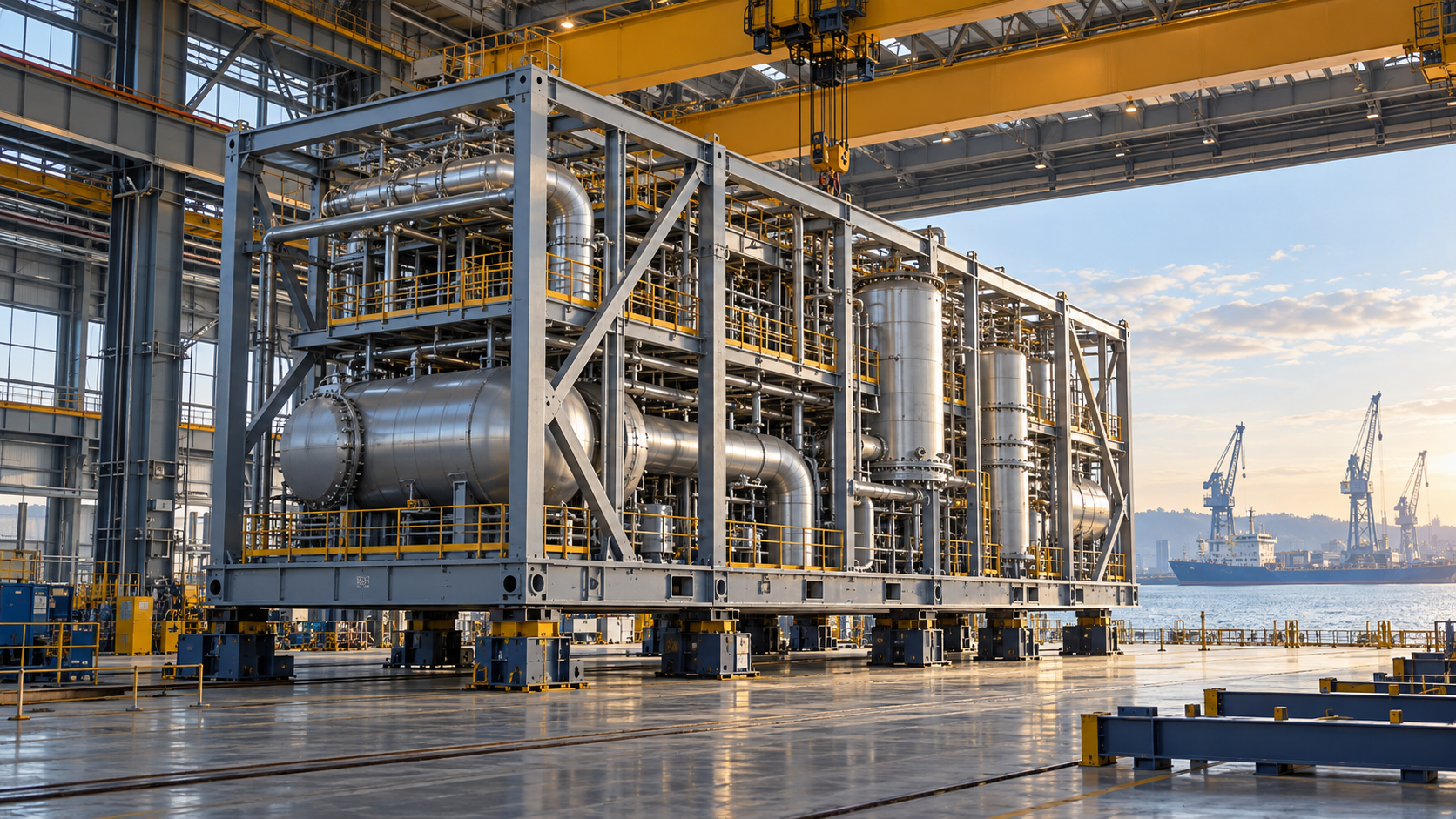
Blue Energy is pursuing a nuclear construction model built around large prefabricated modules made at shipyards and moved by barge for final assembly. MIT News described the approach October 22 in a profile of founder and CEO Jake Jurewicz. The modules are designed to combine mechanical, electrical and plumbing systems before shipment.
The company's proposed Victoria, Texas, project plans an initial gas-powered phase in 2030, followed by nuclear capacity beginning in 2032. Those are planned milestones, not operating results. The stated rationale is to earn revenue earlier while transferring more construction work into an established manufacturing environment.
NAOAT analysis
Moving work into a fabrication hall changes the sequence of a project. It creates an opportunity to inspect more of a module before it arrives at the destination. It also makes the connections between modules especially important: a well-built section is only useful if its dimensions, services and installation sequence match what is waiting on site.
For buyers and project managers, a useful progress report would distinguish completed fabrication, accepted inspection records, transport readiness and readiness of the receiving site. Combining those into a single percentage could hide an important mismatch. Equipment can be finished in one location while civil works or connection points remain incomplete elsewhere.
The transport plan deserves the same attention as the production plan. Module dimensions, handling arrangements and the route to final installation should be treated as design inputs. A manufacturing change that saves assembly effort could introduce a different constraint if the finished module cannot move through the intended route on schedule.
The business case will ultimately depend on repeatable delivery across the entire chain. Investors and customers can assess that case more clearly when projected savings are separated from demonstrated outcomes and each handoff has a defined acceptance standard.