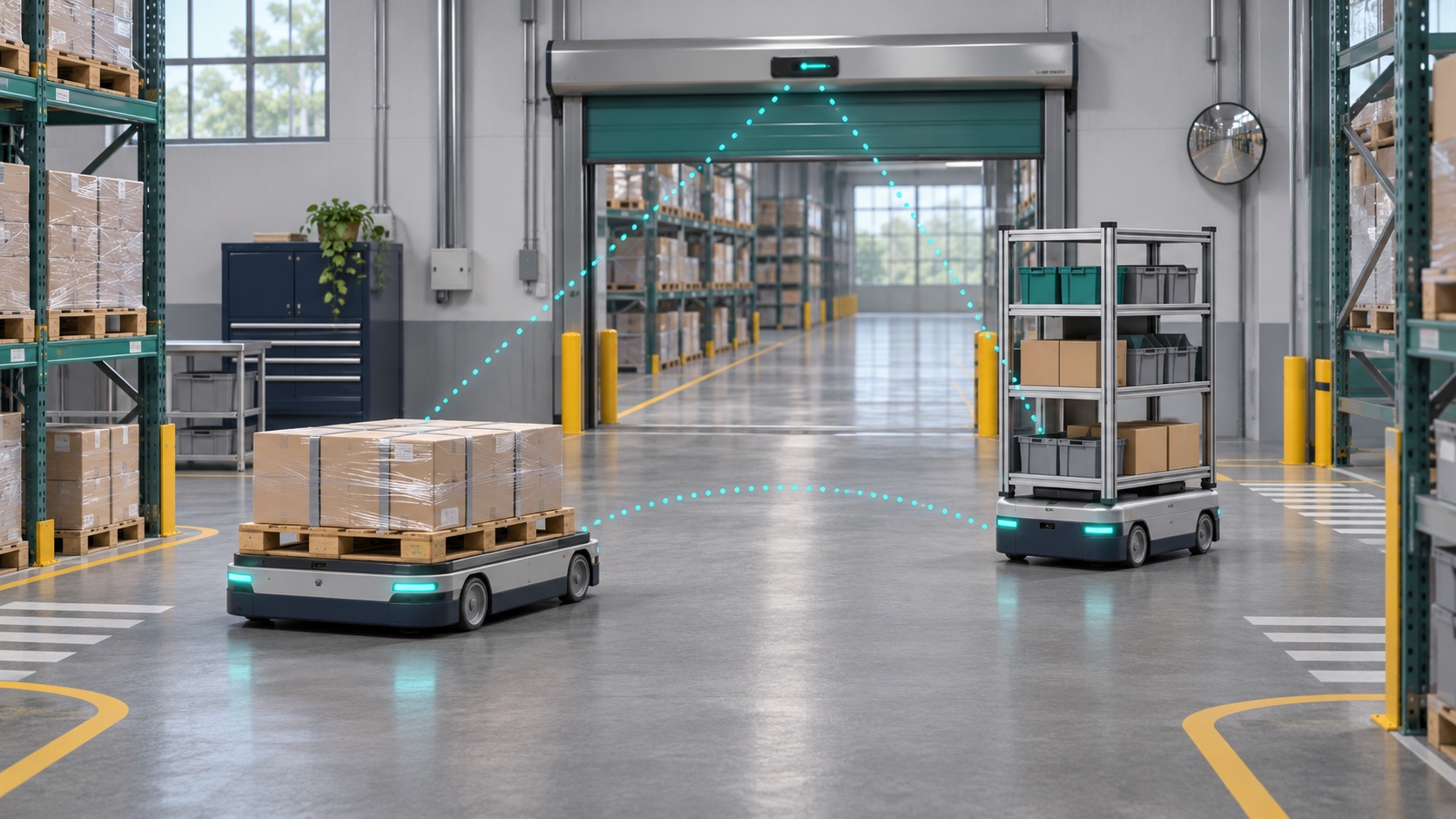
One job for Carter, a mobile robot made by Robust AI, starts with a worker gathering goods and ends several hundred feet away. The person who recognizes the right item and places it on the cart can send it on to the next station without walking beside it. In a November 13 interview with MIT News, the company’s founders described how that division of work plays out in factories and warehouses.
Carter resembles a utility cart. Its handle senses force, and its wheels allow sideways motion without first turning the cart to face the new direction. A worker can guide it into a convenient position to load it. Its vision system supports autonomous travel. Depending on the assignment, the robot can also lead a worker to a picking location or follow the worker from one stop to the next.
Those modes give the same vehicle different roles within a shift. Robust AI says customers determine how to fit it into their operations. The founders described existing warehouse and factory deployments, without supplying a controlled comparison of output across sites.
The trip after the pick
A long trip between stations is a different cost from the few seconds spent positioning a cart beside a shelf. Automating the trip can free the picker to start the next order. Keeping the handle available lets that same picker deal with a crowded loading spot immediately. The relevant measurement spans both ends of the journey, including how long the receiving station waits and how often someone has to leave another job to move the vehicle.