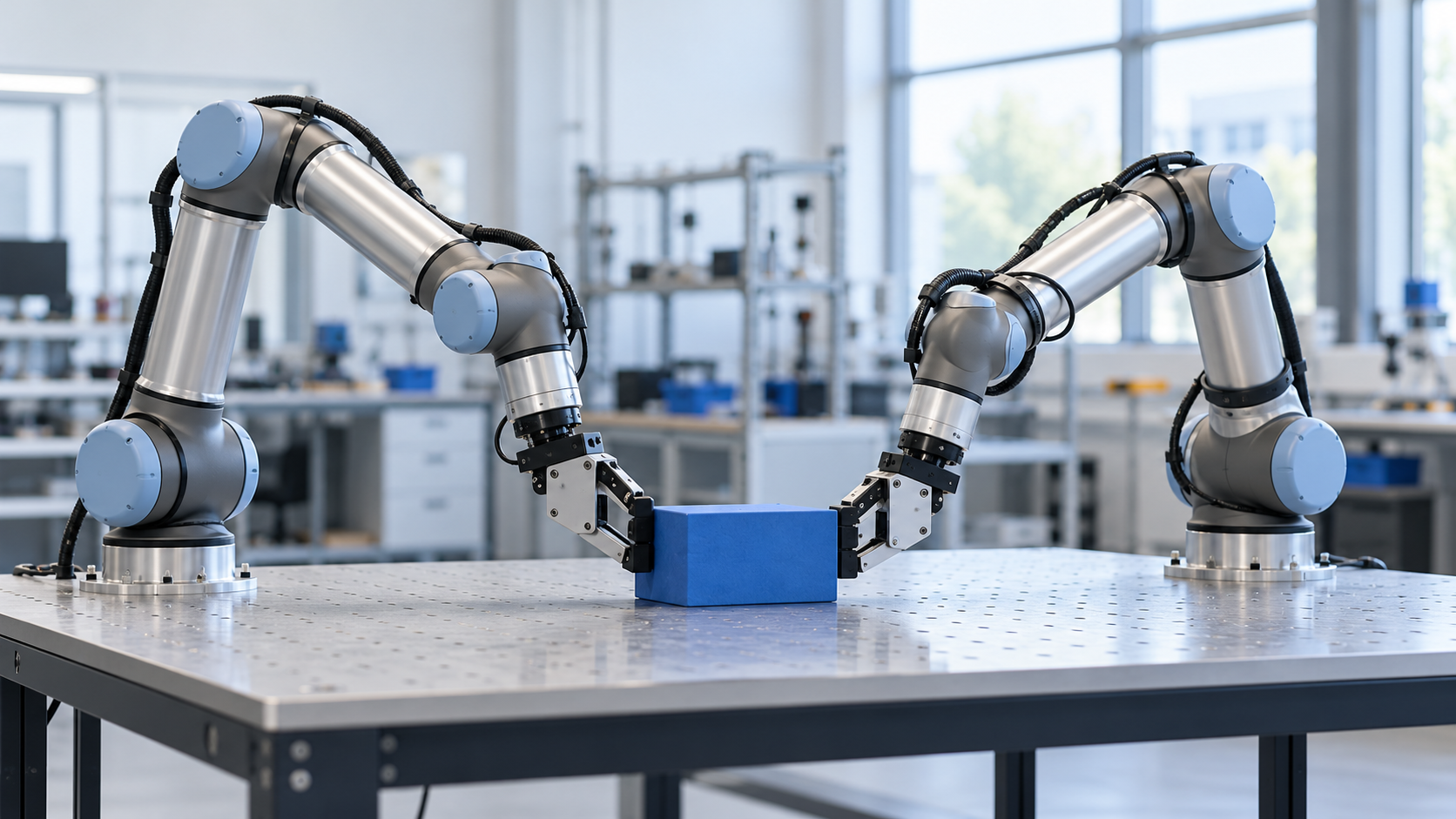
Dream Labs has made Dream-1 available through a public API, according to its October research announcement. The company reports transferring manipulation skills to previously unseen robots with two arms and parallel grippers. The model can specify gripper positions, while each robot’s inverse-kinematics software translates those targets into joint commands.
The company cautions that performance depends on that translation and can suffer when a robot differs substantially from the training hardware. Dream-1 is a research beta that has not been validated for safety-critical use. The published demonstrations and evaluations do not establish suitability for every workplace task.
NAOAT analysis
For an engineering team, the most revealing trial would separate the model’s task understanding from the machine’s ability to execute a movement. If the gripper selects the right object but the arm cannot reach it, that is a different failure from choosing the wrong object. Recording only task completion would conceal that distinction and make improvements harder to assign.
A small test set could deliberately include these separate challenges: recognizing an instruction, reaching an object, gripping it, placing it and recovering after a miss. Repeating the same set after a hardware or software change would help show whether an apparent gain comes from the model, the robot configuration or the surrounding setup. Unsuccessful attempts belong in that record alongside successful ones.
The API also creates an operational handoff that deserves explicit ownership. A team evaluating it should decide who checks commands, who can stop a trial and what happens when a request fails or returns late. These are useful evaluation questions even before productivity is considered. Access to a transferable model can shorten one part of development while leaving the responsibility for a complete, tested robot system with its integrator.