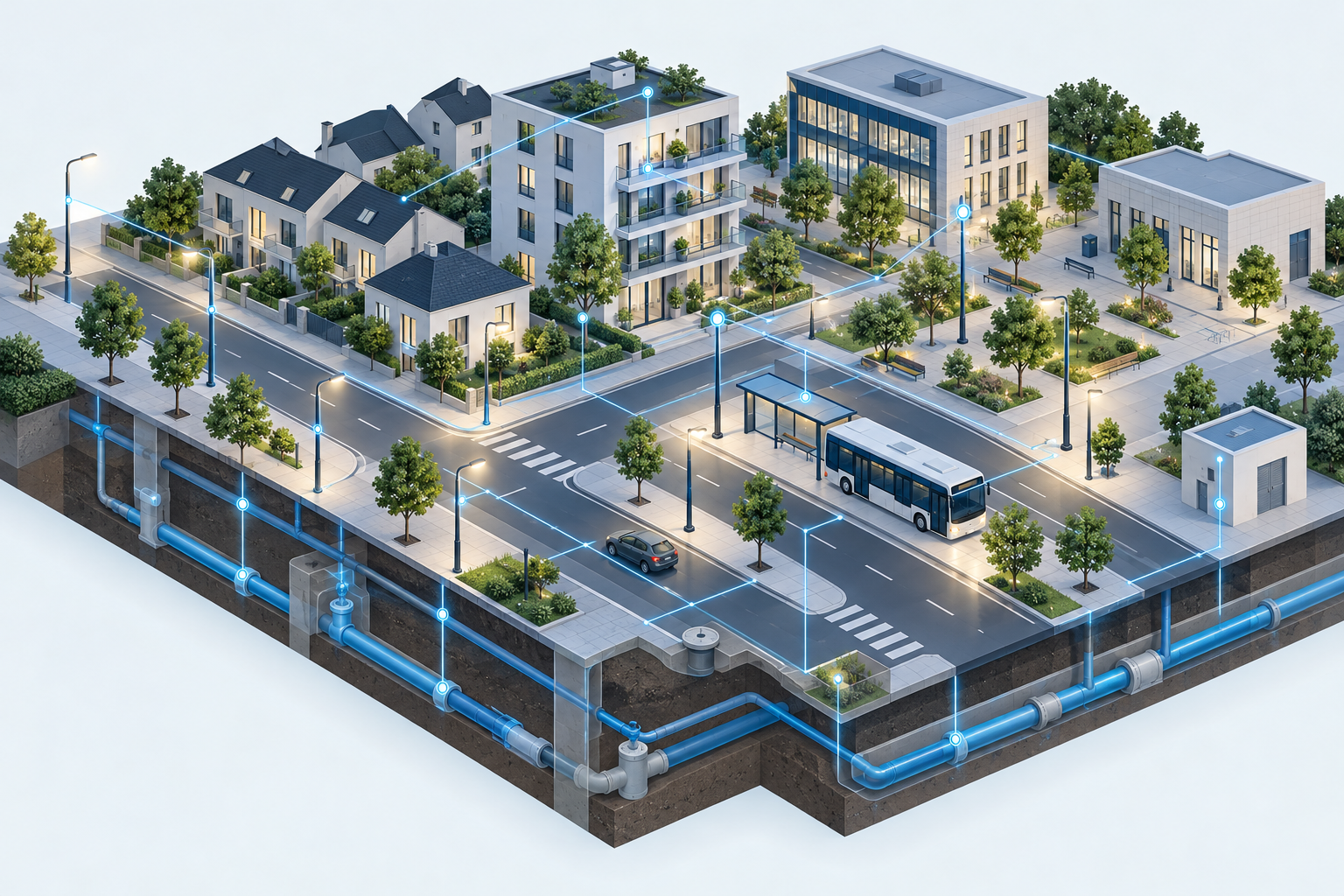
In an October 16 IEEE article, Smart Cities program leaders describe a technical community with more than 7,000 volunteers working across ten tracks. Topics include water, energy grids, mobility, security, lighting, governance, and AI. New webinars, workshops, educational resources, and other activities are being developed.
The update follows the program’s transition to an IEEE Technical Activities Board technical community in November 2025. It also describes ambassador events and standards work in progress. Those activities provide opportunities for exchanging experience; they should not be read as a completed universal standard or evidence that a particular city deployment has succeeded.
NAOAT analysis
The useful unit of exchange is a well-described operating problem. A city seeking to reduce water losses, for example, needs to explain how leaks are detected, who validates an alert, and how repairs are prioritized. A presentation centered only on a sensor platform makes it difficult for another municipality to decide whether the experience transfers.
Peer learning would be stronger if each case included the starting conditions and the work that remained after installation. Two cities might deploy similar equipment but have very different maintenance staffing, communications coverage, or procurement constraints. Those differences can matter more to replication than the product name.
A practical workshop could ask participating teams to describe one failed handoff between a digital system and a public service. An alert that no department owns, or a dashboard that residents cannot challenge, offers a concrete design problem. Comparing how cities resolved that handoff could produce a more useful result than ranking projects by how much technology they contain.
Resident-visible outcomes should anchor the evaluation. For a lighting project, that might mean reliable fault response and understandable reporting channels alongside electricity use. For mobility, it could mean whether the information helps people complete a trip. These proposed measures connect technical exchange to service quality while leaving each city responsible for its own priorities, privacy choices, and operating decisions.