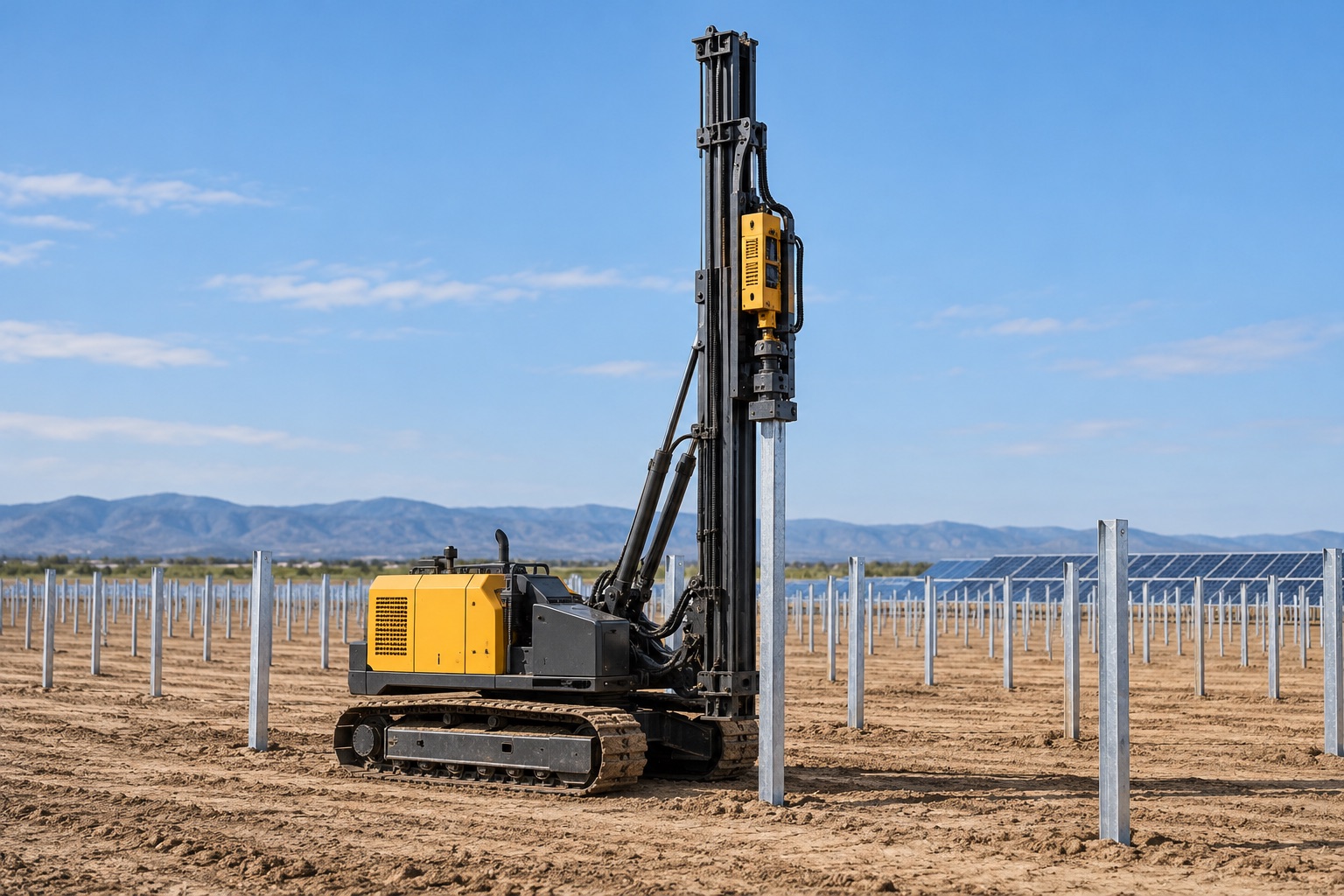
Xpanner announced the commercial launch of X1 Piling R6 on October 26 for utility-scale solar and battery-storage construction. Its automation system, mounted on an Everstar R6 crawler, handles travel, alignment and pile driving under an operator’s remote supervision. The company says its dashboard records pile position, depth and plumb.
Xpanner claims a 45% faster cycle than its prior generation, without publishing a detailed comparison protocol in the announcement. Its subscription includes the machine, automation, software and support. Pre-drilling and screw driving are described as future capabilities, not features established by this launch.
NAOAT analysis
The development connects two parts of renewable-energy construction that are often discussed separately: machine productivity and evidence of completed work. Installing a foundation is a physical operation; determining what was installed and where is an information problem. An automated system linking both could change the handoff between the equipment crew and the people responsible for checking progress and accepting work.
A faster machine cycle does not translate automatically into an equivalent reduction in a project’s construction schedule. Material supply, access and the pace of subsequent work can limit how much a local improvement changes the overall outcome. The reported percentage is therefore a claim about a particular comparison, rather than a forecast for every solar or storage project using the equipment.
The recorded installation data gives this launch an additional business dimension. A digital entry can make work easier to trace, but it does not independently prove that a foundation meets its design requirements. The distinction between a machine’s record and acceptance of the finished installation remains significant. Xpanner’s combination of equipment and service will ultimately be judged by both physical output and the usefulness of that evidence during construction.