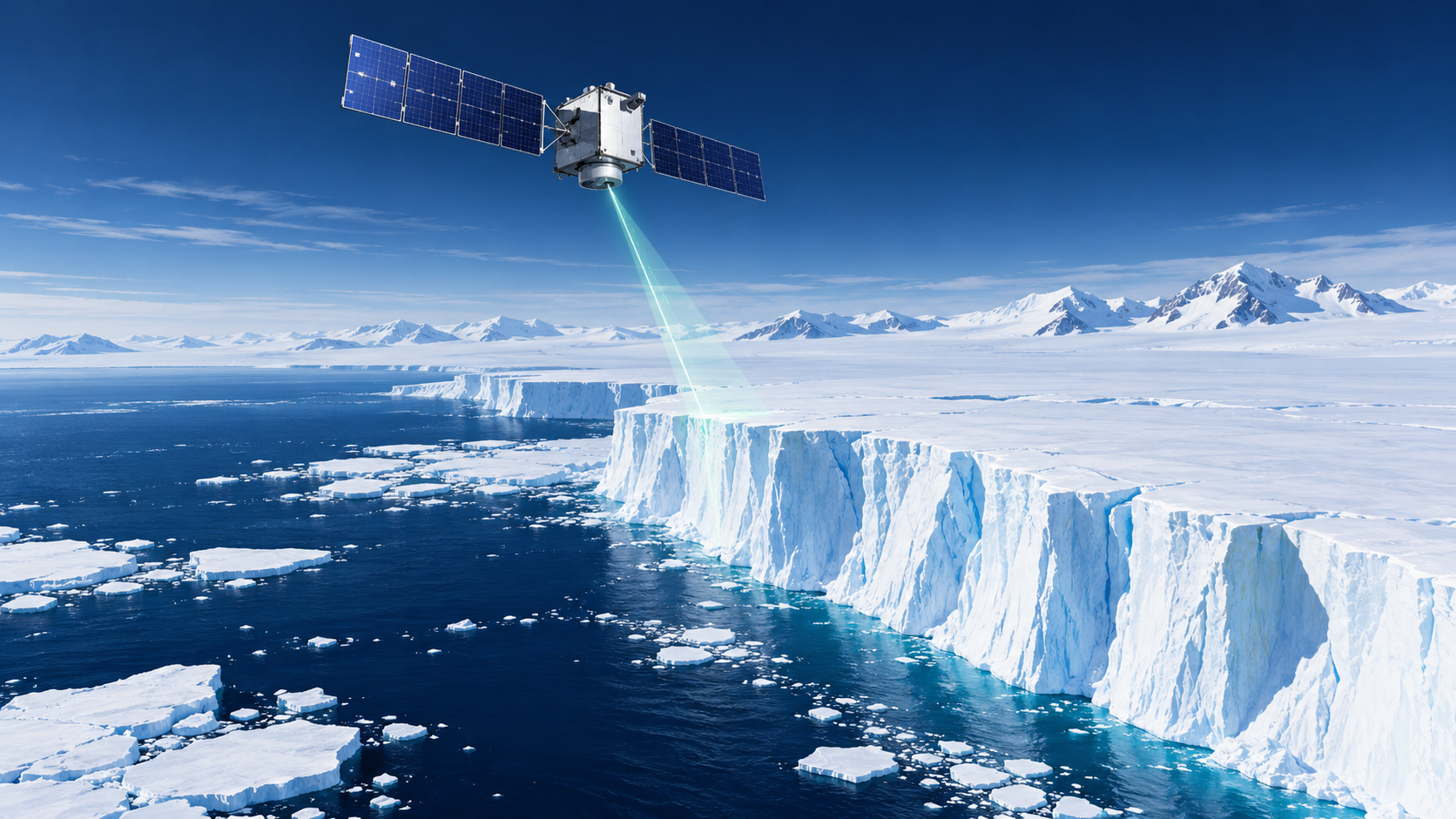
MIT and Woods Hole Oceanographic Institution researchers analyzed more than 15,000 Antarctic ice cliffs using ICESat-2 measurements from 2019 to 2023. MIT reported the work on October 15 alongside its publication in Science. Satellite observations sampled cliff behavior every three months.
Closer examination of four regions with unusually tall cliffs found rapid retreat followed by stabilization, rather than uninterrupted collapse. The researchers identified underlying topography and ice thinning as factors that models need to represent. The observations challenge a height-only treatment of instability; they do not establish that future Antarctic ice loss is harmless or eliminate uncertainty about sea-level rise.
NAOAT analysis
For remote-sensing developers, the result illustrates why a repeated observation can be more informative than a sharper single image. A picture taken during retreat could support one interpretation; the subsequent measurements can reveal whether that movement continues, slows, or reverses. The engineering requirement is therefore to preserve a dependable time series as well as spatial detail.
Model evaluation should likewise separate the speed of a change from its persistence. A model could underestimate the initial retreat yet overestimate the eventual loss if it misses stabilization. Reporting only one aggregate error would conceal that combination. An evaluation organized around event onset, retreat rate, and later behavior would make the disagreement easier to diagnose.
This distinction is useful for organizations purchasing climate-risk information. A regional hazard assessment should explain which physical processes its projections include and which observations constrain them. A newly observed stabilizing mechanism is a reason to improve that assessment, not a sufficient basis to remove long-term risk from planning.
A practical next research test would hold back some locations or observation periods while revising the model, then evaluate whether the changes improve predictions on those withheld measurements. That proposed test would help distinguish a better physical explanation from a closer fit to the observations already examined.