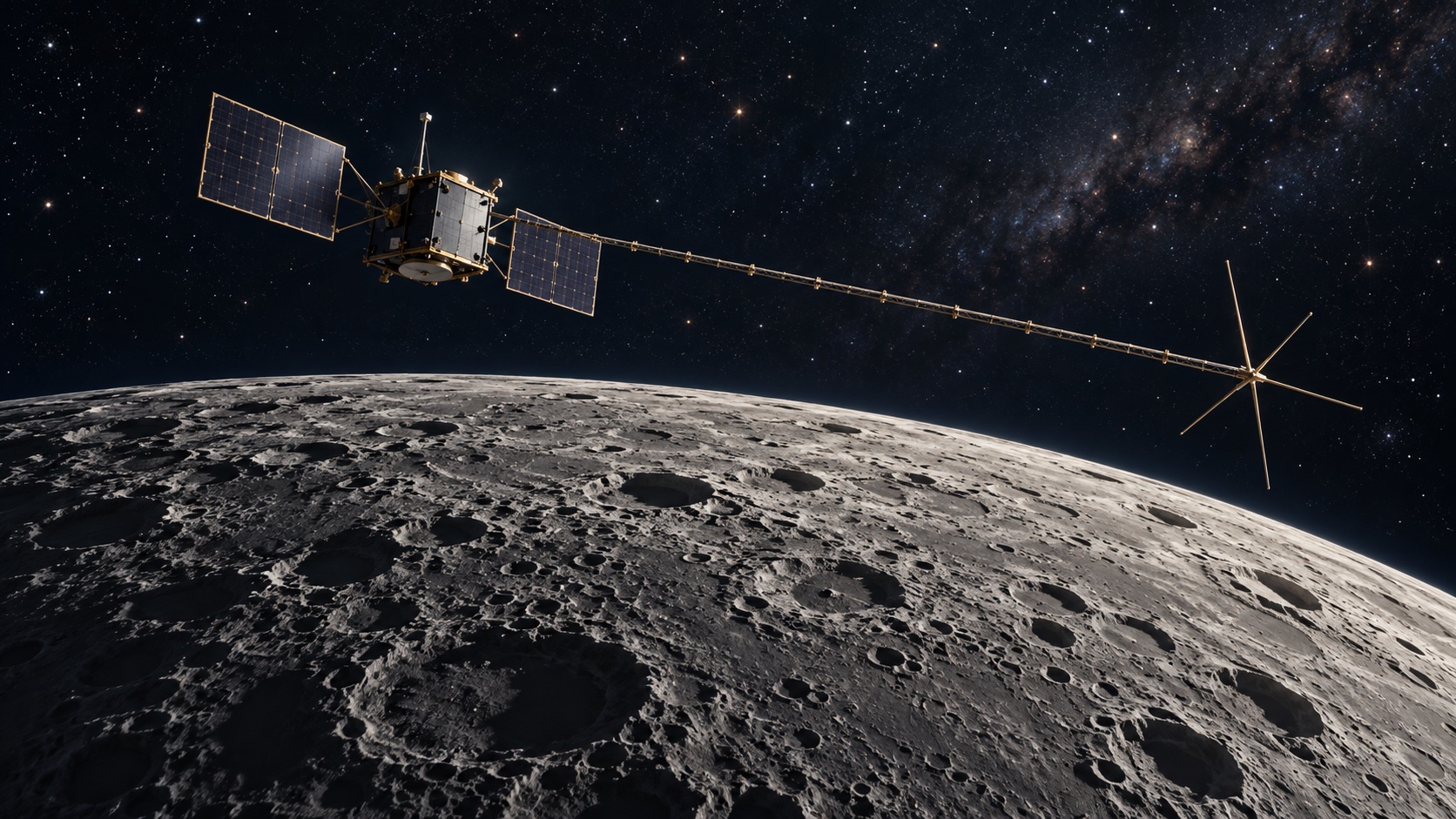
NASA announced the next engineering test telescope for the ESA-led LISA mission on October 8. L3Harris will design, assemble and integrate the unit, carrying forward lessons from a prototype delivered in 2024. NASA describes it as the last pre-flight unit and its first optical telescope delivery to ESA.
The telescope uses Zerodur, a glass-ceramic selected for dimensional stability over changing temperatures. LISA is planned for the mid-2030s, with three spacecraft exchanging laser signals across 2.5-million-kilometer separations. The current milestone concerns test hardware; it is not a flight telescope delivery or an operational gravitational-wave measurement.
NAOAT analysis
Precision instruments make the distinction between a prototype and an engineering test unit especially important. A prototype can establish whether an approach is promising. A later unit provides an opportunity to test the design and interfaces in a form closer to what another organization must integrate and eventually operate.
For a supplier, the useful record is the connection between a test observation and a design decision. If a measurement changes after a thermal cycle, the team needs to understand whether the cause is the optical assembly, its mounting or the measurement setup. Preserving that chain of evidence helps prevent a correction to one component from concealing a problem elsewhere.
The handoff also changes who must be able to interpret the evidence. An acceptance package should allow the receiving team to understand the configuration tested, the conditions applied and any remaining limitations. This is a practical reason to keep development history organized before the hardware leaves the original laboratory.
LISA’s scale is unusual, but the lesson extends to smaller precision systems. Material selection, assembly and measurement have to support one another. A successful intermediate unit is valuable when it reduces uncertainty about those relationships and makes the next production decision better supported.