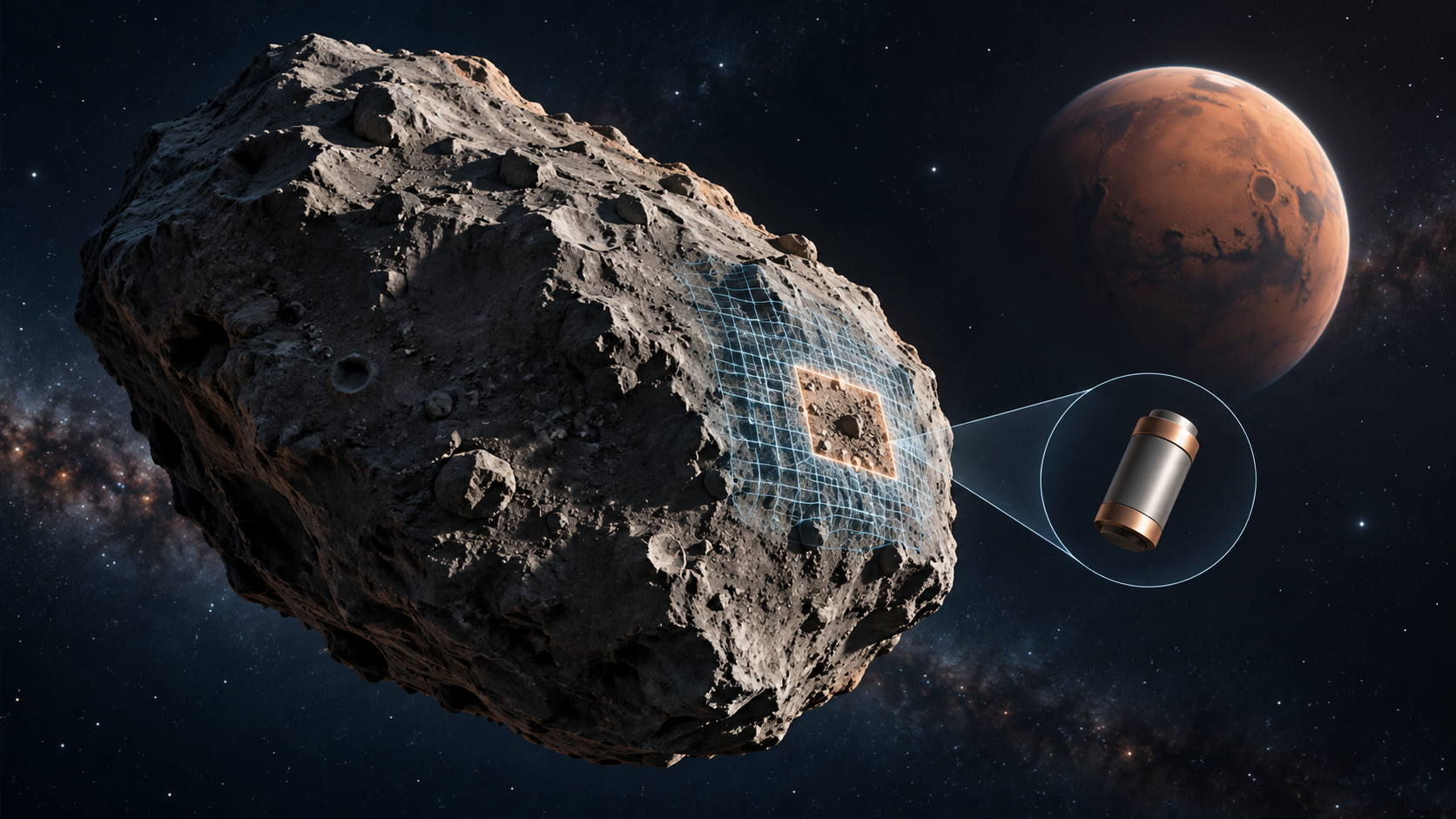
JAXA’s Martian Moons eXploration mission launched aboard an H3 rocket from Tanegashima at 04:41 Japan time on October 20, ESA confirmed. The mission aims to study Mars’s moons and return material from Phobos.
NASA’s October 15 briefing describes MEGANE, which uses gamma rays and neutrons to investigate elemental composition, and the gas-driven P-Sampler, which complements JAXA’s deeper C-Sampler. NASA also plans to curate about 15 percent of the returned material. Earth return is planned for 2031; launch does not mean that arrival, collection, or return has been accomplished.
NAOAT analysis
The scientific strength of this combination is the connection between context and a physical specimen. A collected sample offers material that laboratories can examine closely, while observations around the collection site help researchers judge what that specimen might represent. Neither perspective substitutes for the other.
The two sampling approaches add another useful comparison. Surface material and material collected from greater depth need not tell identical stories. Keeping their collection histories distinct would let researchers investigate differences rather than blending them into one description of Phobos. The results could establish whether any such differences are meaningful.
Representativeness remains a limit even with complementary instruments. A detailed measurement of a small amount of material cannot automatically describe an entire moon. Linking the sample to its location and surrounding observations is how a mission can make the scope of its conclusions clearer.
Curation extends that logic beyond the return date. Preserving identifiable portions of the material allows future investigations to ask questions that were not part of the original instrument plan. For the technology community, MMX is consequently a study in designing an evidence chain: measurements guide collection, collection records support interpretation, and preservation keeps later analysis possible. The launch has started that effort; the most demanding evidence-producing stages still lie ahead.