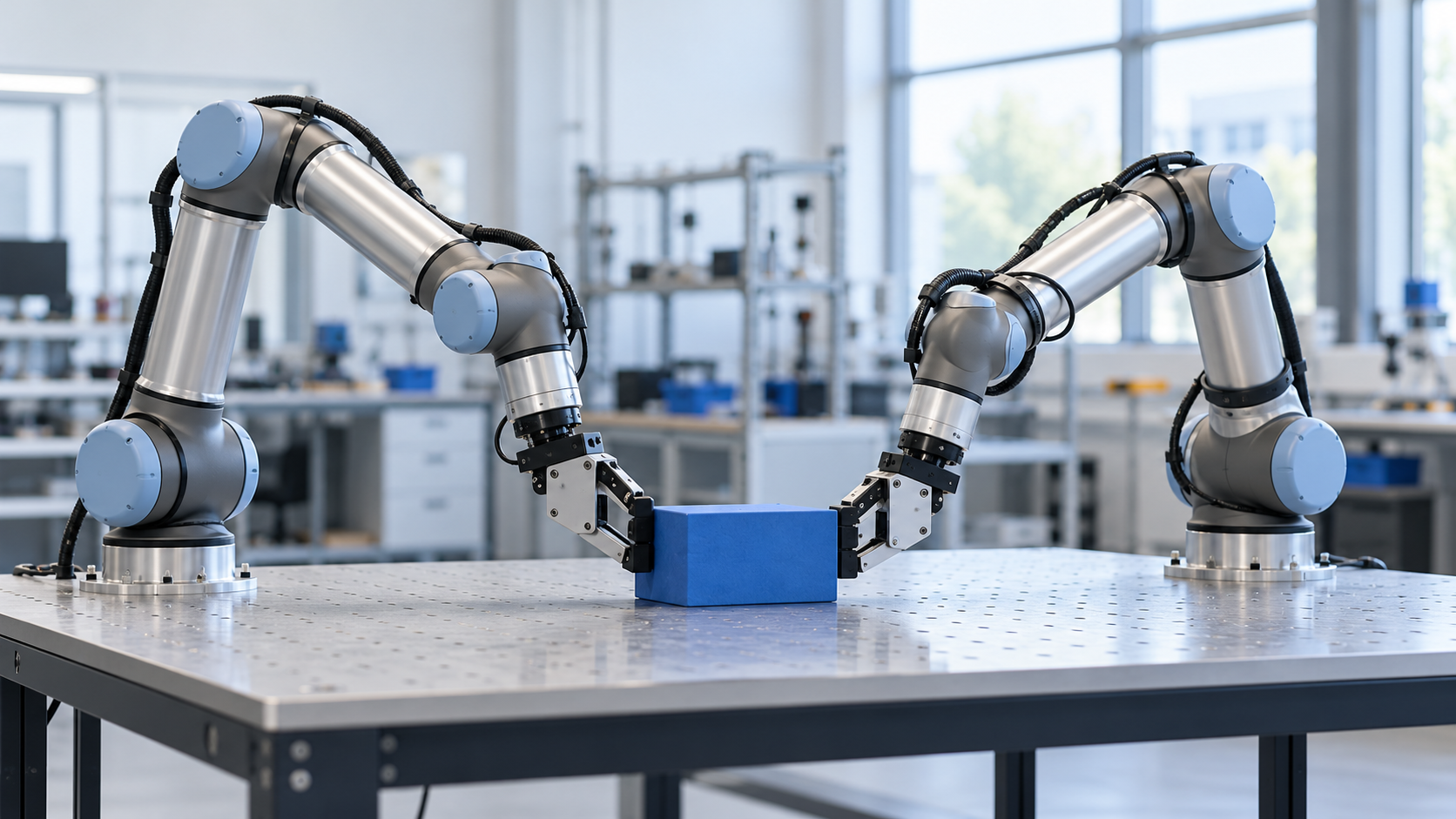
Eka Robotics announced a $150 million Series A on October 20, led by Andreessen Horowitz and F-Prime. The company says the funding will expand its vision-force-action model and customer deployments. Its approach combines visual information with physical interaction and trains manipulation policies through reinforcement learning in simulation.
Investor Andreessen Horowitz describes force feedback as part of the system and reports laboratory picking results of up to 1,500 picks per hour. Its account identifies sustained performance across production shifts as a further test. Those results should not be read as a throughput guarantee for a customer’s operation.
NAOAT analysis
A useful evaluation would begin at the point where a robot touches the workpiece. Selecting the right object is only one part of a successful operation; the next question is whether the machine can recognize that its grip or placement needs adjustment. A buyer could ask to see unsuccessful attempts and recoveries, alongside a normal run, using its own representative materials.
The comparison should count accepted output rather than movements alone. A faster sequence loses value if people must inspect or repair more items afterward. Recording damaged parts, interventions and restart time would make the performance claim easier to compare with the existing process. The trial should include a complete work sequence, including replenishment and handoff to the next station.
The employee-training requirement is equally concrete: operators need a usable description of what the system can recover from and when they should intervene. A pilot that produces this knowledge can improve the purchasing decision even before a wider deployment. Funding makes further development possible; a documented operating envelope is what helps an employer decide where the resulting equipment belongs.